Grades 1-8 · 10 minutes a day · 7-day free trial

Ten minutes a day, before it becomes “I’m just bad at math.”

BrightStep is a ten-minute daily learning check-in for children in grades 1-8, used by families anywhere in the US. It adjusts to what they can already do, then tells them to go play.

The report card said “meets some expectations.” The teacher said he’s fine, he just needs practice. You have twenty minutes at eight o’clock, and you are the only one keeping track. This is the ten minutes that keeps track for you.

One account covers every child · Cancel anytime · No ads, and nothing is ever sold to your child

What some of our early users say

Their own words, unedited.

My daughter was behind for her grade and now she feels all caught up with her reading and math.
Marina, parent. Her daughter did it 15 of her first 21 days.
Allowed me to keep my girls engaged on a long overseas vacation, and they feel comfortable with their back to school.
Marcela, parent (early user)

What a 10-minute daily learning routine actually does

It runs itself

No lesson planning, no printing, no worksheets to hunt down, no nagging. Your child opens it, does their check-in, and it is done. You look at the parent dashboard when you feel like it, not every night.

An after-school routine that sticks

The same short session every day, at whatever time fits your family: after school, before dinner, or over the summer to hold the ground they gained. Streaks and points make it theirs, and a deep question bank keeps daily math and reading practice fresh instead of repetitive.

They start it without being asked

Because it is short enough to finish and theirs to own. Underneath, real questions about starting the hard thing first, beating distraction, keeping a promise to yourself, and getting back up after a bad grade, taught on purpose, not left to chance.

Confidence in real subjects

Difficulty adapts to each child: hard enough to challenge them, never so hard they quit. Aligned to Common Core and NGSS, so practice reinforces what they learn in school.

See the actual grade-level questions

Every question is written for one specific grade, and the academic ones are tagged to a Common Core or NGSS standard, so a fifth grader and a sixth grader never see the same set. A session is four questions in grades 1-2, five in grades 3-5, and six in grades 6-8. The difficulty then moves with your child: hard enough to be worth doing, never so hard they quit.

Math · Grade 5

A store sells 12 notebooks for $6.00. Another sells 8 for $4.40. Which is the better price per notebook?

Real reasoning, not drill-and-kill.

Life Skills · Grade 7

Research suggests procrastination is usually about…

avoiding an uncomfortable feeling like boredom or fear of failing

Why “just try harder” never worked.

Life Skills · Grade 2

When you can NAME a feeling out loud, it usually…

gets a little smaller

Naming an emotion genuinely reduces it.

Off-screen · Grade 2

Ask a grown-up at home: “What was the best part of YOUR day?” Then really listen.

Some of the best activities happen away from the app.

See sample questions

Built to be finished, not lingered in.

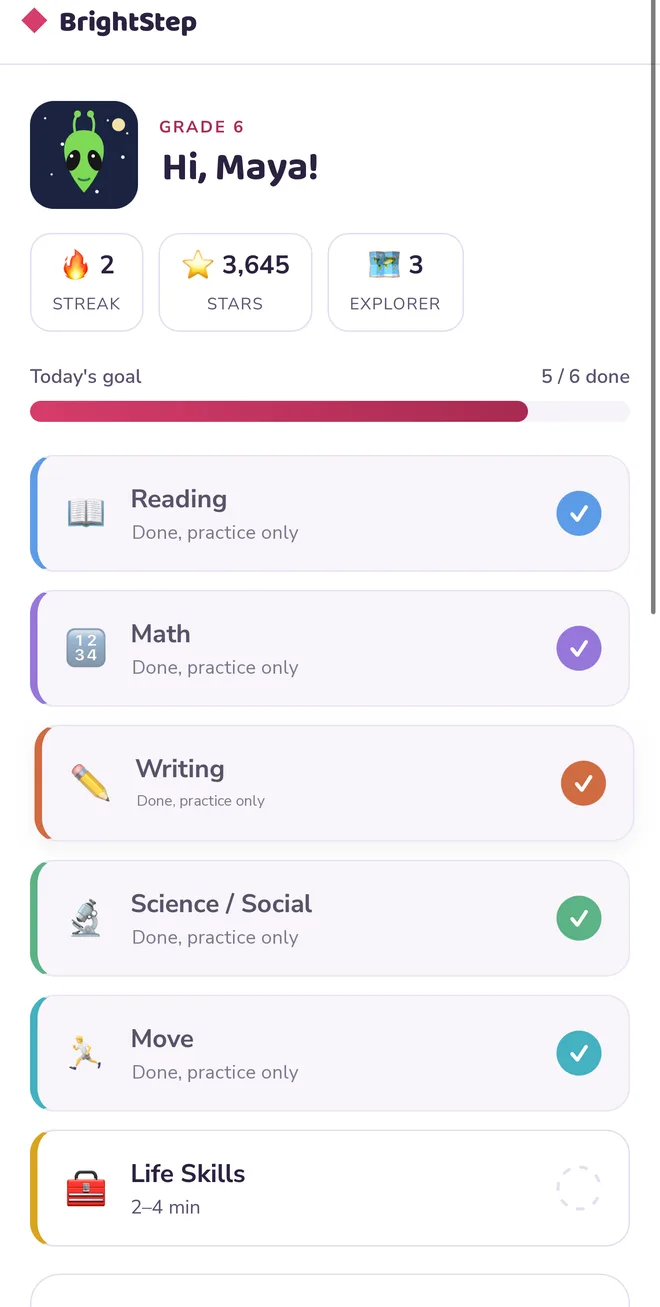
This is the real interface, and the real feedback a child gets the moment they answer.

Every question explains itself, right or wrong.

📱 Works on iPad and iPhone with a custom app icon. Add it to the Home Screen in about twenty seconds. It opens full screen with no browser bars, and there is no App Store download.

The rest of learning belongs here too.

Reading and Math keep skills sharp. But the part parents tell us matters most is the rest of it: a child learning to start the hard thing first, to notice what set them off at school, to say “I just want you to listen right now” instead of slamming a door, and to ask a parent about their day.

Those are in here on purpose, written for each grade, and many of them are activities to go do rather than questions to answer.

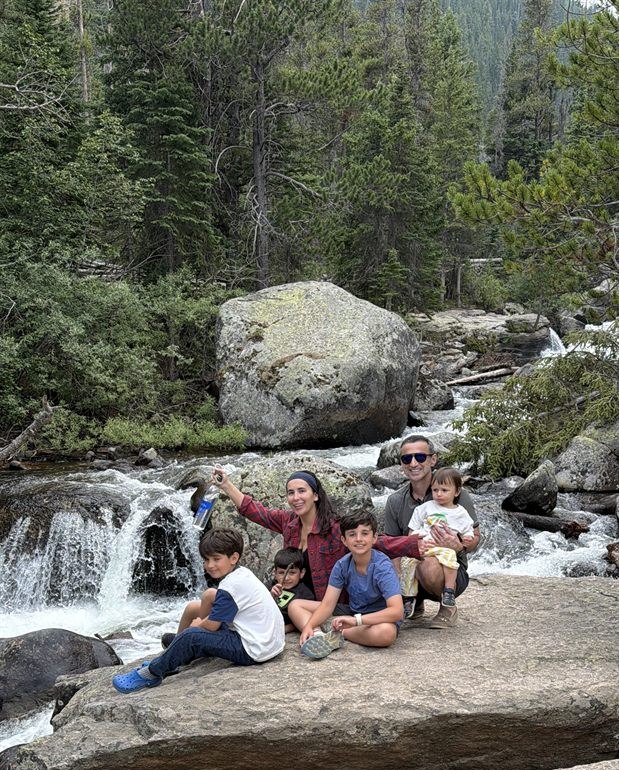
Our family on a hikeOur family: the original test group.

Why we built BrightStep

When summer vacation started, I wanted to keep our kids engaged with a little schoolwork. But I didn't want it to be a burden, not on them, and honestly not on us either. Nobody wanted to spend the summer nagging.

So the goal was simple: keep it short, make it genuinely fun, and make finishing it feel like something worth doing. That's when we started putting BrightStep together.

It worked better than we expected. Our kids ask to go on it, even when we're away on a trip like the one in that photo.

Then other parents started asking whether their kids could use it too. Enough of them asked that we decided to open it up. We've seen what it did for our own children. It felt wrong to keep it to ourselves.
What you get as a parent

You can see whether it is working without turning it into another thing you have to manage.

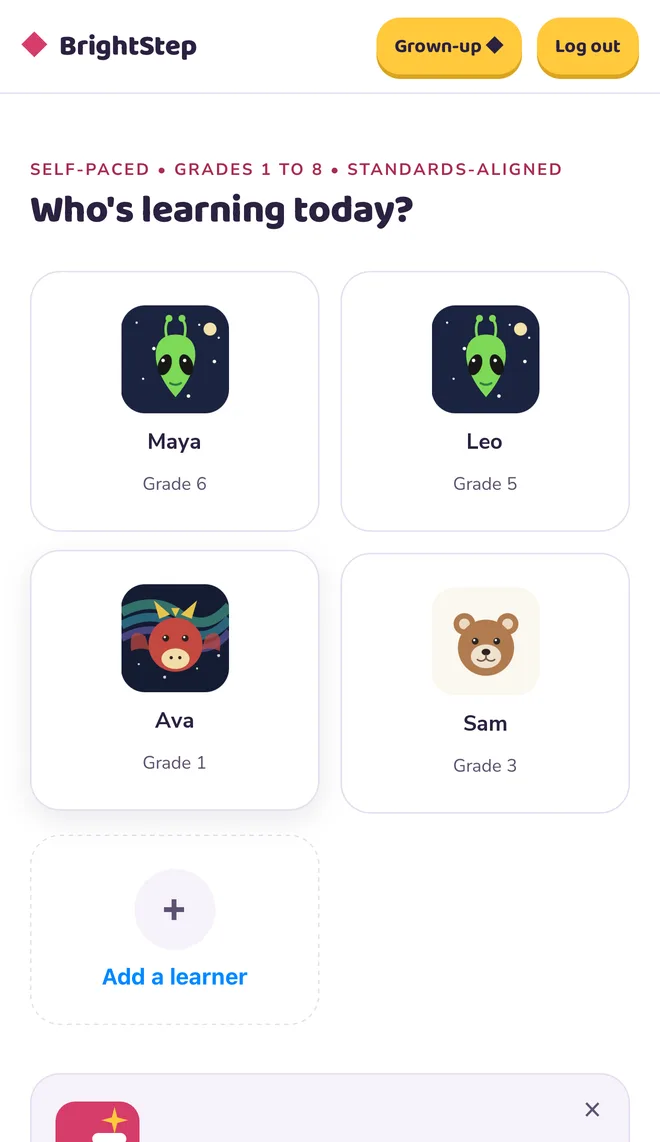
A dashboard behind a PIN

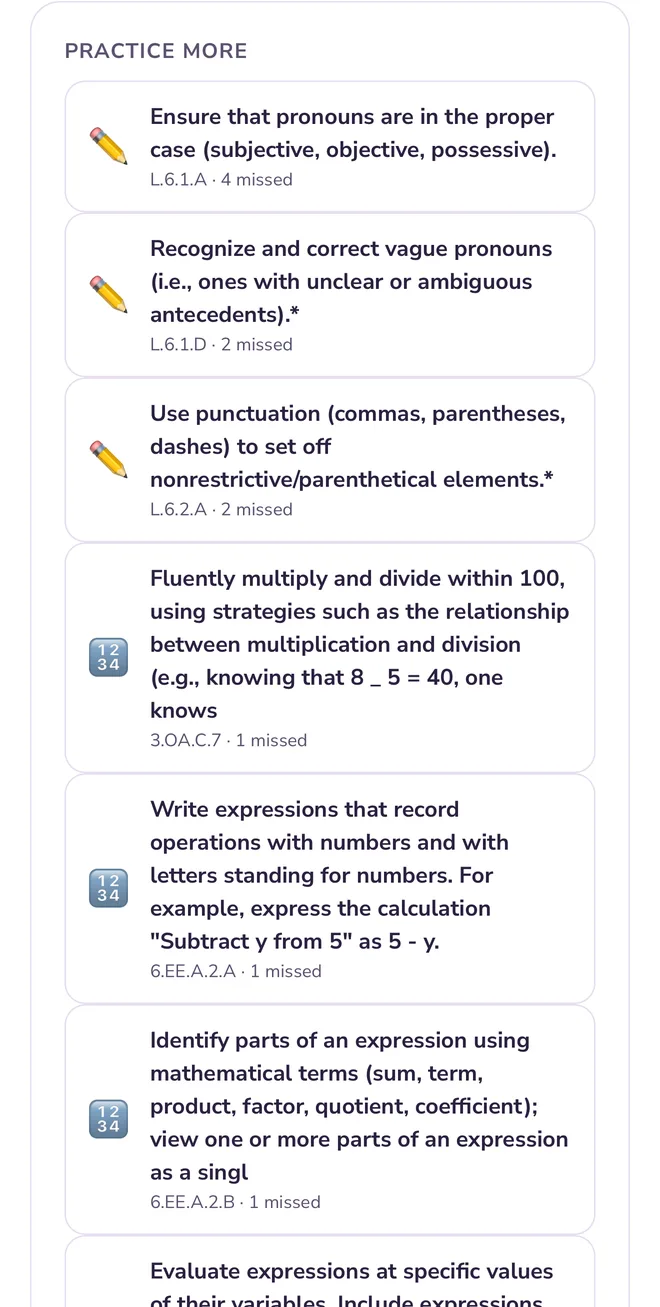
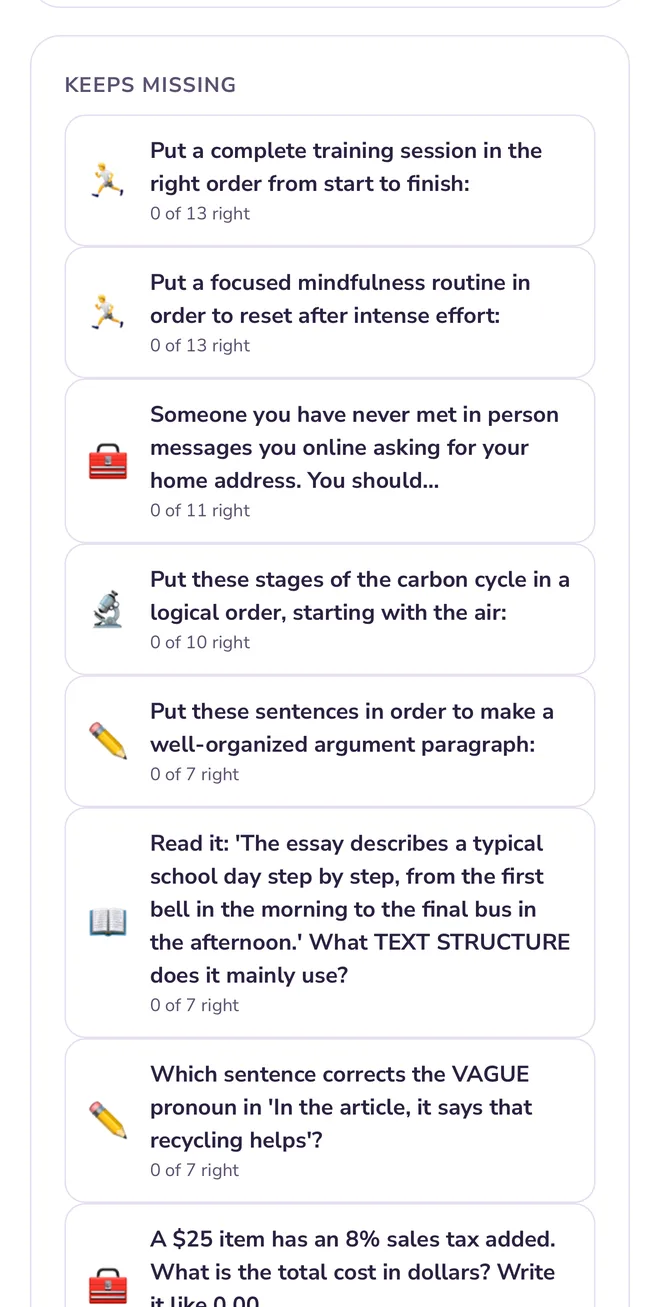
Streaks, a 14-day heatmap, progress by subject, and which standards each child has practiced.

Screen-time limits you set

Three escalating levels. The hard stop pauses the app until you enter your PIN.

You approve the rewards

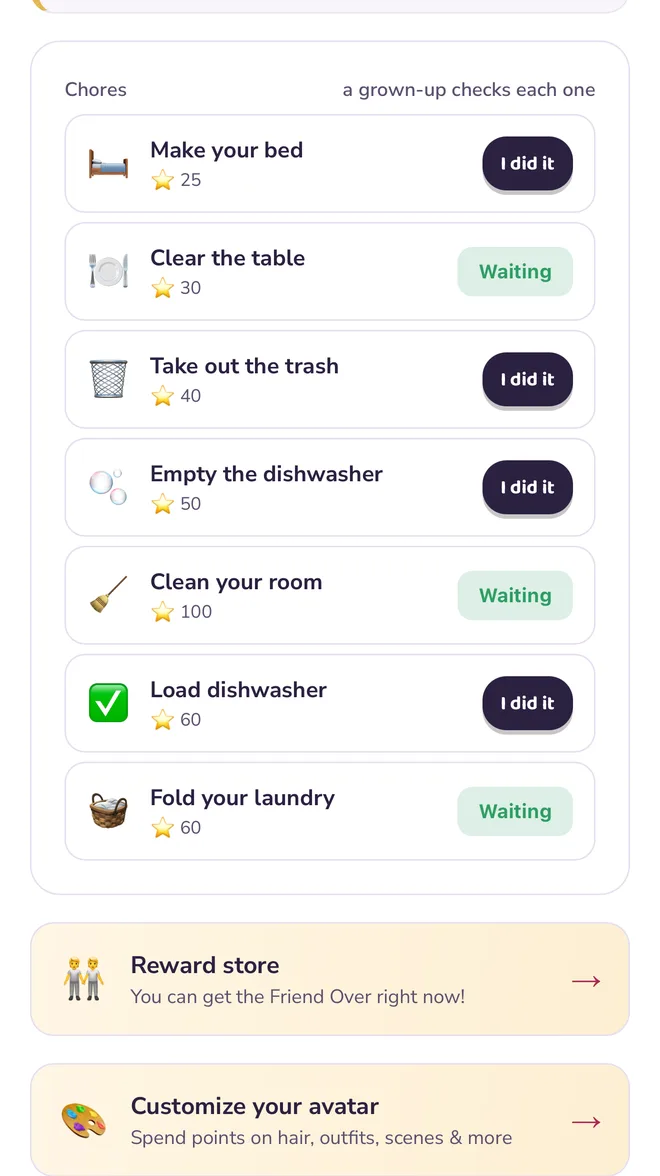
Kids earn points and request things. Nothing costs you anything without your say-so.

Privacy by design

First name and grade, nothing more. No ads, no tracking, no social features, no contact with strangers.

What BrightStep won’t do

It ends.

Most apps built for children are designed to hold them longer. This one is designed to hand them back to you. When the screen-time limit you set runs out, the app stops. It does not beg for one more level.

It sells your child nothing.

No ads, no tracking, no in-app purchases, no social feed, no messages from strangers. We store a first name and a grade. That is the whole file.

It will not replace school.

Ten minutes a day is practice, not a curriculum. Anyone promising an app will teach your child a full year of math is selling you something. This keeps what they learned in class from leaking out.

It will not get longer.

Four questions a subject in grades 1-2, five in 3-5, six in 6-8, and that is the ceiling. A session a child cannot finish is the session they quit, and a routine that breaks is worth nothing.

What another year of this costs

The gap does not hold still while you decide. It widens quietly, and somewhere in there a child stops saying “this is hard” and starts saying “I’m just bad at this”, which costs far more to undo than to prevent. And you spend another year being the one who notices.

One hour with a private tutor costs more than a month of BrightStep. A year is $250 for every child in the house, about 68¢ a day. Setup takes two minutes, and the first week is free.

Start the free week

Worried they’ll use it twice and lose interest? That is exactly what the free week is for. If it doesn’t stick, cancel in two clicks and pay nothing.